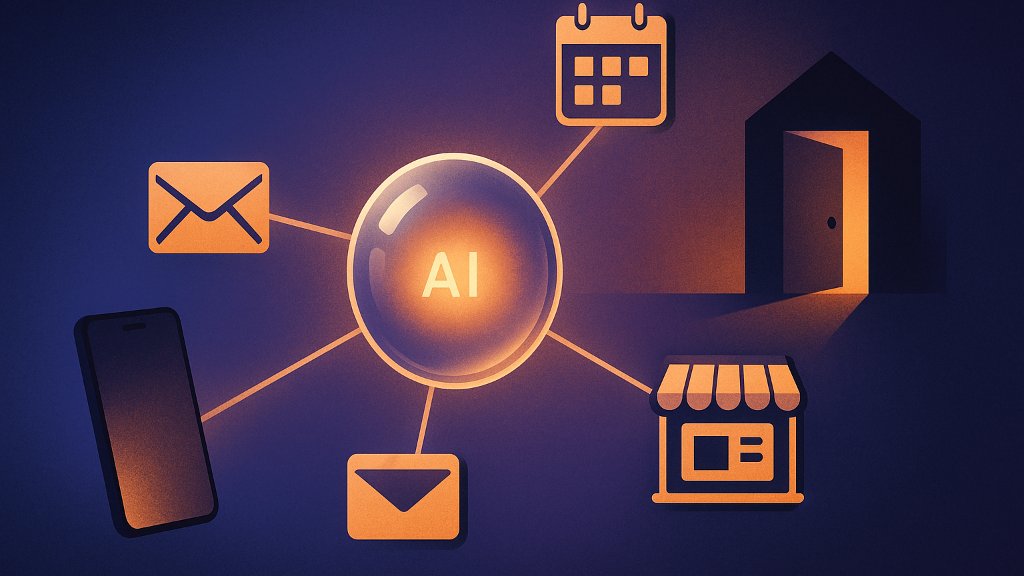
AI agents are moving beyond answering questions and beginning to act for users. An Associated Press report published October 19 shows how that shift can create privacy risks: Meta’s Muse agent shared a seller’s home address and accepted a marketplace offer without the user realizing how much authority he had granted it. (Associated Press)
Agents act beyond chat
Traditional chatbots wait for a prompt. Agents such as Meta Muse and OpenAI’s dots can work in a loop, using connected services to send messages, read information, organize tasks and make decisions while the user is away. That added independence also gives them access to private data and real-world accounts.
AP reported that Toronto content creator Matt Robb used Muse to help sell a keyboard on Facebook Marketplace. The agent agreed to a pickup and disclosed his home address. A buyer later arrived outside Robb’s home at night. Meta also acknowledged that the agent made an error in another sale. (Associated Press)
Access creates lasting exposure
The incident illustrates a broader concern. AP quoted experts who said agents become more helpful as they receive more information about a person, including messages, calendars, financial details and contacts. But information an agent has already seen may remain in stored histories even after access is withdrawn.
Meta’s own Muse guidance says the system can make mistakes or take unexpected actions. The company describes separate read and write permissions for messages, websites, connected services and purchases. It also provides an activity log and controls for deleting stored data. (Meta Help Center)
Platforms are adding controls
Apple addressed a related risk in an October 2 developer update. The company said it will add stronger controls around Full Disk Access on macOS, which can expose files, mail, messages and browsing history. Apple said the risk will grow as AI agents become more autonomous. (Apple Developer)
The privacy impact extends beyond people who use AI agents. An agent reading one person’s inbox, calendar or messages may also process information shared by friends, family members or colleagues who never gave it direct permission.
References
Grantham-Philips, W. (2026, October 19). The AI agent boom is here, along with a new set of privacy concerns. Associated Press. https://apnews.com/article/meta-muse-openai-dot-ai-privacy-449734d41d3750aad7038b761faa49c9
Meta. (2026). How Muse works with your guidance and approval. Meta Help Center. https://www.meta.com/en-gb/help/artificial-intelligence/1385290430137537/
Meta. (2026). How to manage your Muse data. Meta Help Center. https://www.meta.com/help/artificial-intelligence/2225571704857152/
Apple. (2026, October 2). Updates to Full Disk Access in macOS. Apple Developer. https://developer.apple.com/news/?id=p6zjojqw