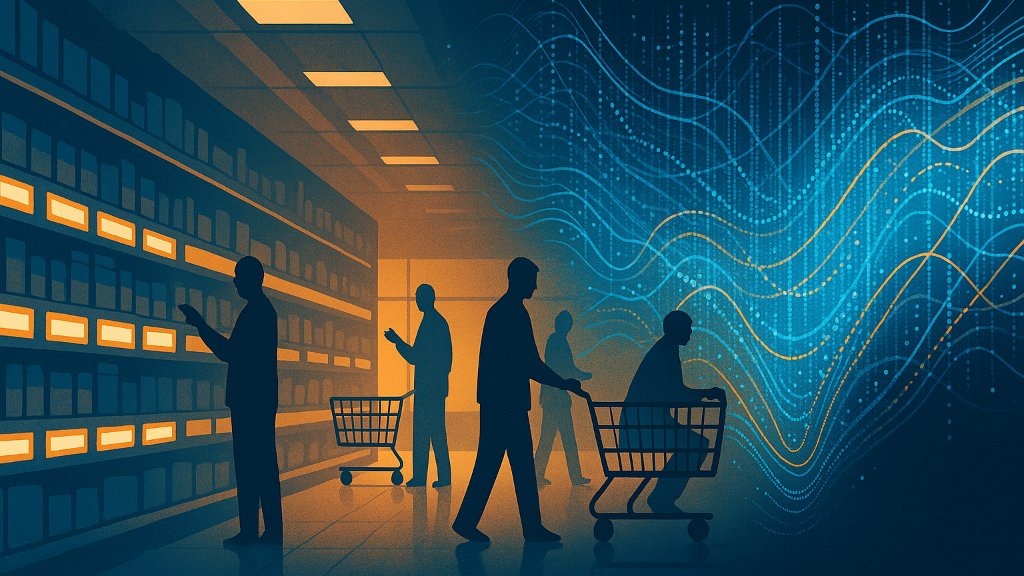
U.S. retailers are adopting artificial intelligence and other software to help set prices, prompting consumer concern and legislative scrutiny over whether algorithms could charge different shoppers different amounts for the same item.
Retail prices gain digital controls
Retailers have long used software to track supply, demand, competitors and sales. Newer AI tools can study more data and recommend prices aimed at increasing sales, clearing inventory or improving profits. A survey of more than 2,200 business leaders in 28 countries and 39 industries found that 41% used AI to gather market information, while 28% used it for real-time price optimization, according to the Associated Press.
Digital shelf labels are one visible example of the change. Walmart said in March that roughly 2,300 of its U.S. locations were using the labels and that the technology was expected to reach the full chain within the next year. Walmart says the labels display centrally approved prices rather than setting prices on their own, according to the company’s explanation.
Personalized pricing draws scrutiny
Dynamic pricing changes with market conditions, such as supply and demand. Personalized pricing is different: it uses information about a shopper, such as location, browsing history or buying behavior, to estimate what that person may pay. That distinction has drawn attention from the Federal Trade Commission.
The FTC’s proposed policy says companies should clearly explain when prices are personalized and how personal data affects them. The policy does not ban personalized pricing in every situation, but the agency said hidden use of personal data could violate consumer protection law.
States consider new limits
At least 30 states, Washington, D.C., and Puerto Rico were considering legislation addressing algorithmic, dynamic or personalized pricing in 2026, according to the National Conference of State Legislatures. Some proposals focus on disclosure, while others would restrict the use of personal data to set prices.
As retailers replace paper tags and add AI to pricing systems, the debate centers on whether these tools simply make ordinary price changes faster or allow businesses to treat shoppers differently without clear notice.
References
Durbin, D.-A., & D’Innocenzio, A. (2026, October 18). Consumer apprehension grows as US retailers adopt AI-assisted pricing tools. Associated Press. https://apnews.com/article/ai-prices-dynamic-customers-technology-64c446cd117d3be664de4ab570fb9857
Federal Trade Commission. (2026, August 19). FTC seeks comment on enforcement policy statement regarding personalized pricing. https://www.ftc.gov/news-events/news/press-releases/2026/08/ftc-seeks-comment-enforcement-policy-statement-regarding-personalized-pricing
National Conference of State Legislatures. (2026, August 20). Consumer goods and services pricing and junk fees: 2026 legislation. https://www.ncsl.org/financial-services/consumer-goods-and-services-pricing-and-junk-fees-2026-legislation
Walmart. (2026, March 2). How the shelf got smarter and our jobs got easier. https://corporate.walmart.com/news/2026/03/02/how-the-shelf-got-smarter-and-our-jobs-got-easier