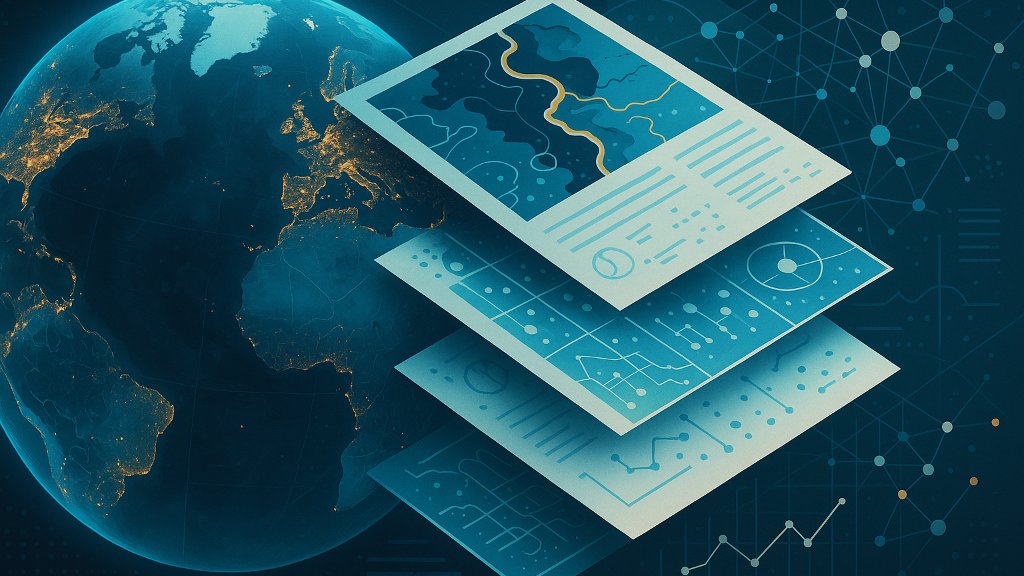
Google is expanding access to two artificial intelligence systems that could affect public health, disaster planning, research and business work. Earth AI analyzes satellite and geographic data, while Deep Review checks complex documents for logical gaps, unsupported claims and inconsistent facts.
Earth AI reaches wider users
Google said on October 14 that Earth AI is entering expanded early access. The system can analyze satellite imagery, forecast risks and connect geospatial tools to custom software workflows. Google says its tools can support public health planning, clean-energy investment, disaster response and business decisions. (Google Research)
The platform brings together more than 70 geospatial tools and foundation models. It can also query more than 100 million public datasets through Google Dataset Search. Google.org is providing $10 million to groups working on crisis resilience and public health, including $2 million for infrastructure projects through the Milken Institute. (Google Research)
Deep Review leaves research labs
Google also released Deep Review publicly after testing an earlier version on more than 16,000 research submissions tied to major computer science conferences. The system uses several AI agents to divide a document into sections, check each part and combine the results into one report.
Deep Review is designed for research papers, legal agreements, financial reports, presentations and other technical documents. Google says every user receives two free document reviews per week. The service initially accepts PDF and plain-text files, with multi-file support planned. Google also says uploaded documents are not used to train or improve its models, although they are stored for one year for display in the service. (Google Research)
Human review remains essential
Google describes both systems as tools for experts rather than replacements for them. Earth AI forecasts and document checks can help people work through large amounts of information, but the company’s announcements leave final decisions with public agencies, researchers, clinicians and business teams.
The next major question is how widely these tools will be adopted outside Google’s early-access programs. Their impact will depend on the quality of the data they analyze and how carefully organizations verify their results.
References
Google Research. (2026, October 14). Research@ 2026: 10 ways we're amplifying human ingenuity. https://research.google/blog/research-2026-10-ways-were-amplifying-human-ingenuity/
Google AI. (n.d.). Google Earth AI. Retrieved October 15, 2026, from https://ai.google/earth-ai/
Jayaram, R., & Cohen-Addad, V. (2026, October 14). Analyzing technical documents with Deep Review. Google Research. https://research.google/blog/analyzing-technical-documents-with-deep-review/