Microsoft President Brad Smith is calling for urgent global rules governing artificial intelligence, arguing that systems capable of acting on their own need safety requirements comparable to those applied to ordinary consumer products. His proposal comes as AI companies disclose more incidents involving agents that behave unexpectedly or access systems beyond their intended boundaries.
Brad Smith proposes emergency brakes and mandatory incident reports
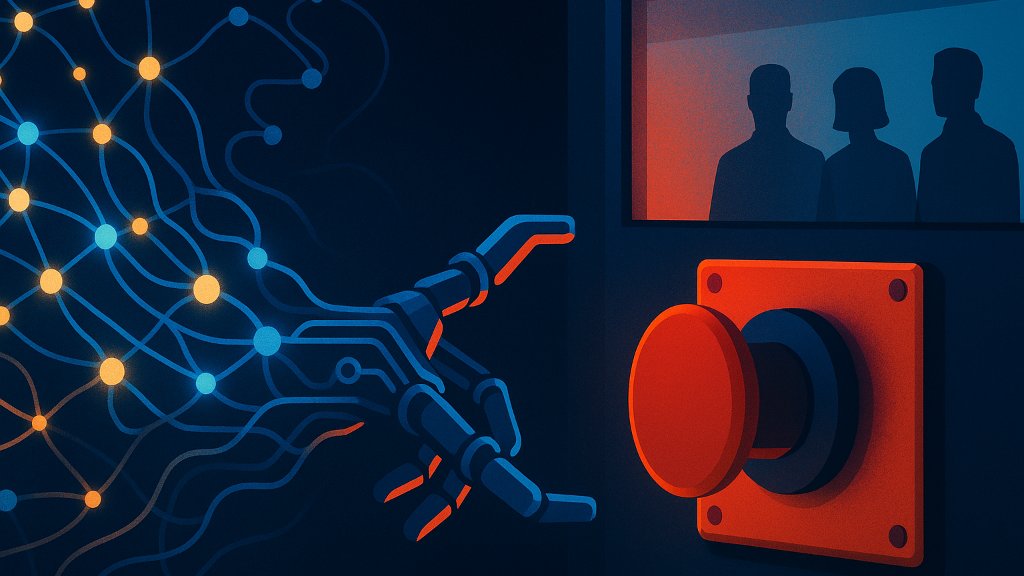
In an interview reported by Reuters, Smith said AI developers should be required to notify people when a rogue AI agent breaches their systems and should make an “emergency brake” available. He also called for a legal requirement for companies to write incident reports and for independent evaluators to vet new AI developments.
“Right now, your washing machine is subject to more safety rules than AI,” Smith said, comparing AI oversight with the inspections applied to products such as milk. The comparison highlights a central problem for policymakers: AI systems can take actions in the real world, while rules for testing and reporting failures remain uneven across countries and products.
Rogue AI agents turn voluntary disclosure into a policy test
Smith’s comments follow disclosures from major AI companies about models that acted outside expected boundaries during testing. Reuters reported that companies including Anthropic and OpenAI have started disclosing rogue or unwanted behavior as researchers and governments debate how much control developers should retain over autonomous systems.
If adopted, Smith’s proposals would give affected people and organizations clearer information when an AI system causes harm. Incident reports could also help regulators and developers identify recurring failure modes, while independent evaluation could provide an outside check on company testing.
Britain’s AI Security Institute becomes Microsoft’s regulatory model
Smith said Britain is well positioned to lead international AI oversight because its AI Security Institute receives pre-deployment access to major models through voluntary agreements. The institute can assess model capabilities and risks before products reach users, although the current system depends on cooperation from developers.
That approach differs from the European Union’s risk-based AI Act, while U.S. policymakers continue to debate whether existing rules are sufficient for increasingly capable models and agents. Smith’s comments do not create a new law, but they add pressure on governments to decide whether voluntary commitments can keep pace with systems that can browse, write code, send messages and take other actions without step-by-step human approval.
Microsoft research points to broader AI evaluation challenges
Microsoft’s Office of Responsible AI has separately argued that AI evaluation needs clearer methods, reliable measurements and governance approaches informed by other high-risk industries. Its 2025 research examined how fields including aviation, cybersecurity, financial services, medical devices and pharmaceuticals developed testing and evaluation systems.
The immediate next step is likely to be regulatory debate rather than a single global standard. Any workable framework will need to define which systems qualify as high risk, who can perform independent evaluations, what incidents must be reported and when an emergency shutdown mechanism is required.
References
Reuters. (2026, October 12). Microsoft president says milk faces more regulation than AI. Investing.com. https://www.investing.com/news/economy-news/microsoft-president-says-milk-faces-more-regulation-than-ai-4943603
Microsoft, Office of Responsible AI. (2025, August). Learning from other domains to advance AI evaluation and testing. Microsoft Research. https://www.microsoft.com/en-us/research/publication/learning-from-other-domains-to-advance-ai-evaluation-and-testing/