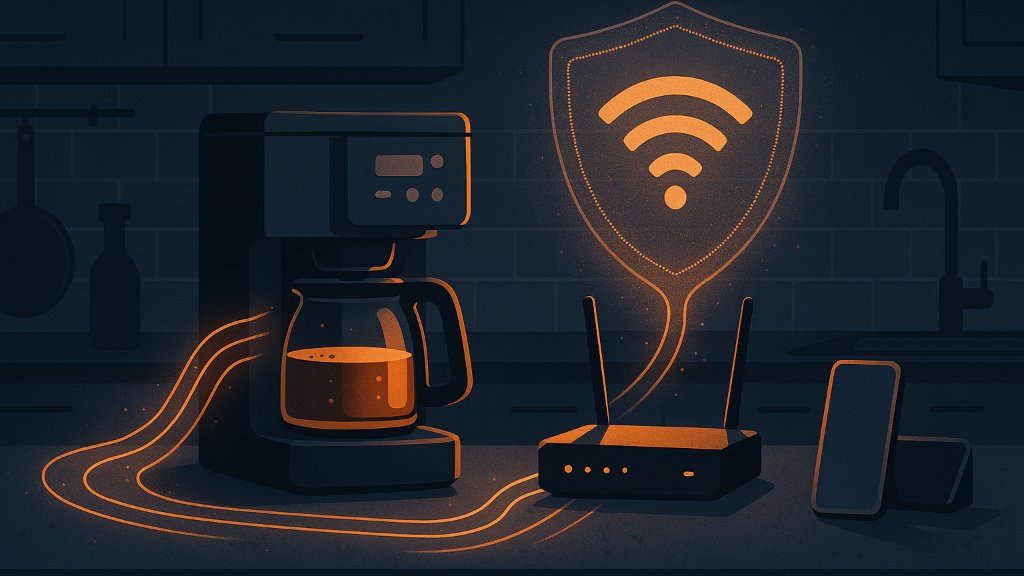
Reports involving two connected coffee makers are putting a broader smart-home problem back in the spotlight: appliances that collect data, request unexpected phone permissions, or transmit unusual amounts of network traffic can create privacy and security concerns that consumers may not see.
TechRadar reported on October 9 that a U.S. information-technology professional noticed a Keurig coffee machine in his parents’ home had transmitted a terabyte of data in 10 days. The available evidence suggests the traffic may have resulted from a software bug, not deliberate surveillance, and the report does not establish what data the machine was attempting to send. The owner disconnected it after the traffic caused network-saturation problems.
In a separate test, TechRadar said a Lavazza coffee-machine app requested access to contacts and call logs. Those permissions have no obvious connection to brewing coffee. TechRadar said it asked the companies for explanations and would provide updates if it received more information.
Why this matters beyond coffee
The incidents show how ordinary appliances can become internet-connected devices without giving consumers much visibility into their data collection or network activity. A compromised or poorly maintained appliance could expose personal information, consume bandwidth, or provide an entry point to other devices on a home network.
Consumer Reports has documented similar concerns across connected appliances. The organization reported that one device in its testing sent the equivalent of 135,000 text messages’ worth of data to its manufacturer each week. Consumer Reports also says connected-product apps may request access to information such as a phone’s contact list, while internet-connected appliances can be more difficult to maintain and secure than phones and computers that receive regular updates.
Neither the Keurig report nor the Lavazza permission request proves that the manufacturers misused customer data. The more immediate lesson is that consumers should treat connected appliances as networked devices with long lifespans, varying update policies, and access to sensitive home networks.
What consumers can do
- Review permissions. Deny contacts, call-log, location, microphone, or other permissions that are not required for a feature you actually use.
- Install firmware and app updates. Check the manufacturer’s support page and companion app for updates before connecting an appliance.
- Use a separate network. Put smart appliances on a guest Wi-Fi network or a dedicated IoT network so a compromised device has less access to computers, phones, and storage.
- Monitor unusual traffic. A router’s device list or traffic monitor can reveal an appliance transferring far more data than expected.
- Ask whether the feature is worth the access. If an appliance works normally without Wi-Fi, leaving it offline may reduce its exposure.
The coffee-maker incidents are still developing, and the companies involved may provide technical explanations. Until they do, the practical conclusion is straightforward: convenience features should not automatically justify unrestricted access to a household’s data or network.
References
- Marshall, C. (2026, October 9). 10TB of mystery data and access to your calls and contacts: “Smart” coffee makers are the perfect example why there’s a privacy revolt happening. TechRadar. https://www.techradar.com/home/coffee-machines/10tb-of-mystery-data-and-access-to-your-calls-and-contacts-smart-coffee-makers-are-the-perfect-example-why-theres-a-privacy-revolt-happening
- Consumer Reports. (2026, May 19). Smart appliances are everywhere. So are the privacy risks. Consumer Reports. https://www.consumerreports.org/electronics/data-theft/tips-data-protection-privacy-smart-devices-a4910202450/
- Consumer Reports. (2023, July 24). Smart appliances promise convenience and innovation. But is your privacy worth the price? Consumer Reports. https://www.consumerreports.org/electronics/privacy/smart-appliances-and-privacy-a1186358482/