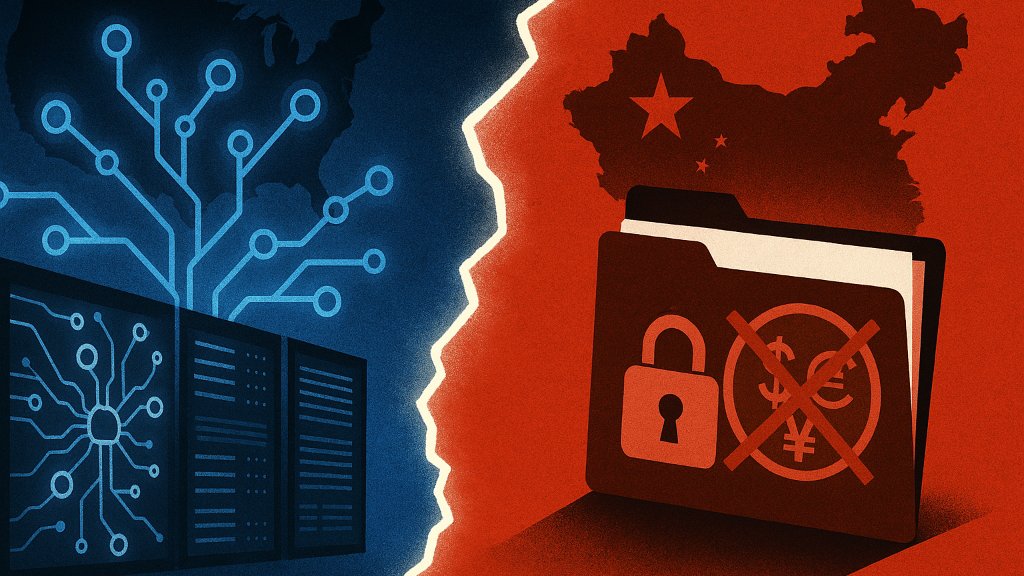
The United States has sanctioned five Chinese entities linked to former Google engineer Linwei Ding, who was convicted of stealing artificial intelligence trade secrets. The action adds pressure to the growing technology conflict between Washington and Beijing.
Five entities face sanctions
The State Department announced the designations on October 19 under the Protecting American Intellectual Property Act. The targets are Shanghai Zhisuan Technology, a company founded by Ding; MiraclePlus; two related investment funds; and another related management entity, according to the Associated Press and the Treasury Department’s sanctions notice.
The sanctions follow Ding’s conviction in a related criminal case. The Justice Department said a federal jury found him guilty on January 29, 2026, of seven counts of economic espionage and seven counts of theft of trade secrets. Prosecutors said he stole more than 2,000 pages of confidential Google information related to artificial intelligence technology.
AI trade secrets drive action
The State Department said Zhisuan was marketed as a company developing software to accelerate machine-learning workloads, including training large “super intelligence” models. It said Ding promoted his Google experience and claimed Zhisuan could replicate Google’s super-intelligence infrastructure technology.
The sanctions block property and interests in property connected to the designated entities that fall under U.S. jurisdiction. The Treasury notice also prohibits covered U.S. financial transactions and new U.S. investment in the sanctioned organizations, subject to applicable licenses.
Beijing threatens response
China’s Commerce Ministry called the sanctions harmful to Chinese companies and urged Washington to reverse them. The ministry said Beijing would take necessary measures, but it did not specify what those measures would be, the Associated Press reported.
The dispute connects AI development with national security, investment controls and intellectual-property enforcement. Companies operating across the United States and China face greater scrutiny over research data, financing and access to advanced computing technology.
Industry tensions deepen
The sanctions are part of a broader series of U.S. actions targeting Chinese technology. Those actions include restrictions on DeepSeek products in federal civilian systems. Together, they show that Washington is treating AI infrastructure and related software as strategic assets rather than ordinary commercial products.
The case also shows how alleged theft of AI trade secrets can lead to restrictions affecting not only the individual accused of taking information, but also investors and organizations connected to that person.
References
Associated Press. (2026, October 20). Beijing blasts US sanctions on 5 Chinese firms tied to ex-Google engineer. AP News. https://apnews.com/article/b888b69ba10c683f89dd6049e9a9d825
U.S. Department of Justice. (2026, January 30). Former Google engineer found guilty of economic espionage and theft of confidential AI technology. https://www.justice.gov/opa/pr/former-google-engineer-found-guilty-economic-espionage-and-theft-confidential-ai-technology
U.S. Department of the Treasury, Office of Foreign Assets Control. (2026, October 19). Protecting American Intellectual Property Act of 2022 (PAIPA) designations; Issuance of associated general licenses. https://ofac.treasury.gov/recent-actions/20261019