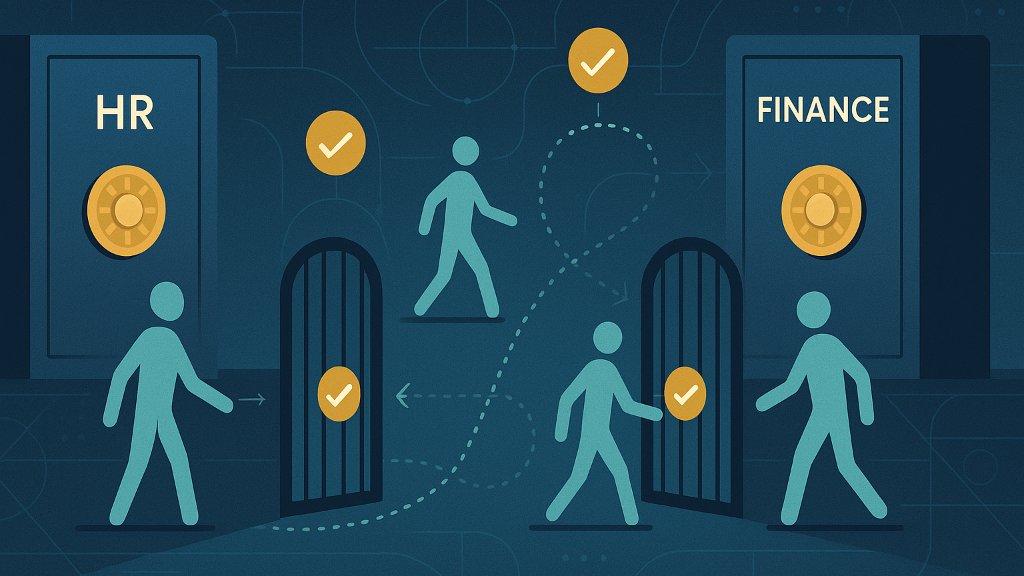
Workday has made its Trusted Agent Platform generally available, giving customers a way to build and run AI agents across HR and finance without copying data into separate systems or relying on shared logins. The move matters because agents can execute business workflows while remaining tied to the permissions, approvals and audit trails already defined in Workday.
Workday removes the login barrier
The platform provides headless access to Workday data and business logic, so an agent can query information or take an approved action without an employee manually navigating the application. Workday says every request carries the relevant identity, access rights, business rules, approval requirements and audit records with it.
The announcement brings several components into general availability, including Workday Data Cloud, Agent-Ready Tools, Developer Agent, Custom Agents and Agent Harness. Workday describes Agent Harness as the runtime for agents, with built-in context, memory and guardrails intended to make each decision traceable.
Permissions travel with requests
Workday’s approach is aimed at a central enterprise-AI problem: connecting an agent to a data lake or system-level account can leave it with more access than the employee who requested the task. Its platform instead applies the rules stored in the live Workday system.
Workday says its Agent-Ready Tools are Model Context Protocol tools that let compatible agents read data and take actions through an approved interface. Live Data Query provides SQL access to live Workday data through Workday Data Cloud, without requiring duplicated or stale data copies.
Developers get agent-building tools
Developer Agent lets teams describe an application or workflow in natural language and use Workday’s domain knowledge and AI capabilities to assemble it. Customers can use development environments including Claude Code, Codex, Cursor and the Workday Developer Site, according to the company.
Custom Agents can then be deployed through Agent Harness. Workday says the platform supports agents created by Workday, customers and partners, with the same permissions and audit controls applied across them.
Models and connectors stay open
The company is positioning the platform as model- and framework-neutral rather than limiting customers to Workday’s own AI. Its announcement names Anthropic’s Claude, Google’s Gemini, Meta’s Llama, Mistral models, OpenAI’s GPT and NVIDIA’s Nemotron open models among the supported choices.
Workday says customers can also use frameworks including Google ADK and LangChain, while support for LangChain and NVIDIA Nemotron is generally available and Google ADK support is accepting design partners.
Enterprise AI moves into workflows
The broader significance is that AI agents are moving from answering questions to handling work involving employee records, compensation, hiring, payroll and financial operations. Workday’s platform gives organizations a single control layer for deciding what agents may see, what they may do and how their actions are recorded.
References
Workday. (2026, October 13). Workday’s Trusted Agent Platform now delivers headless access to HR and finance, letting customers build and run lawful AI agents. Workday Newsroom. https://newsroom.workday.com/2026-10-13-Workdays-Trusted-Agent-Platform-Now-Delivers-Headless-Access-to-HR-and-Finance,-Letting-Customers-Build-and-Run-Lawful-AI-Agents
Monroy, G. (2026, October 13). Introducing Workday’s Trusted Agent Platform. Workday Blog. https://blog.workday.com/en-us/trusted-agent-platform.html